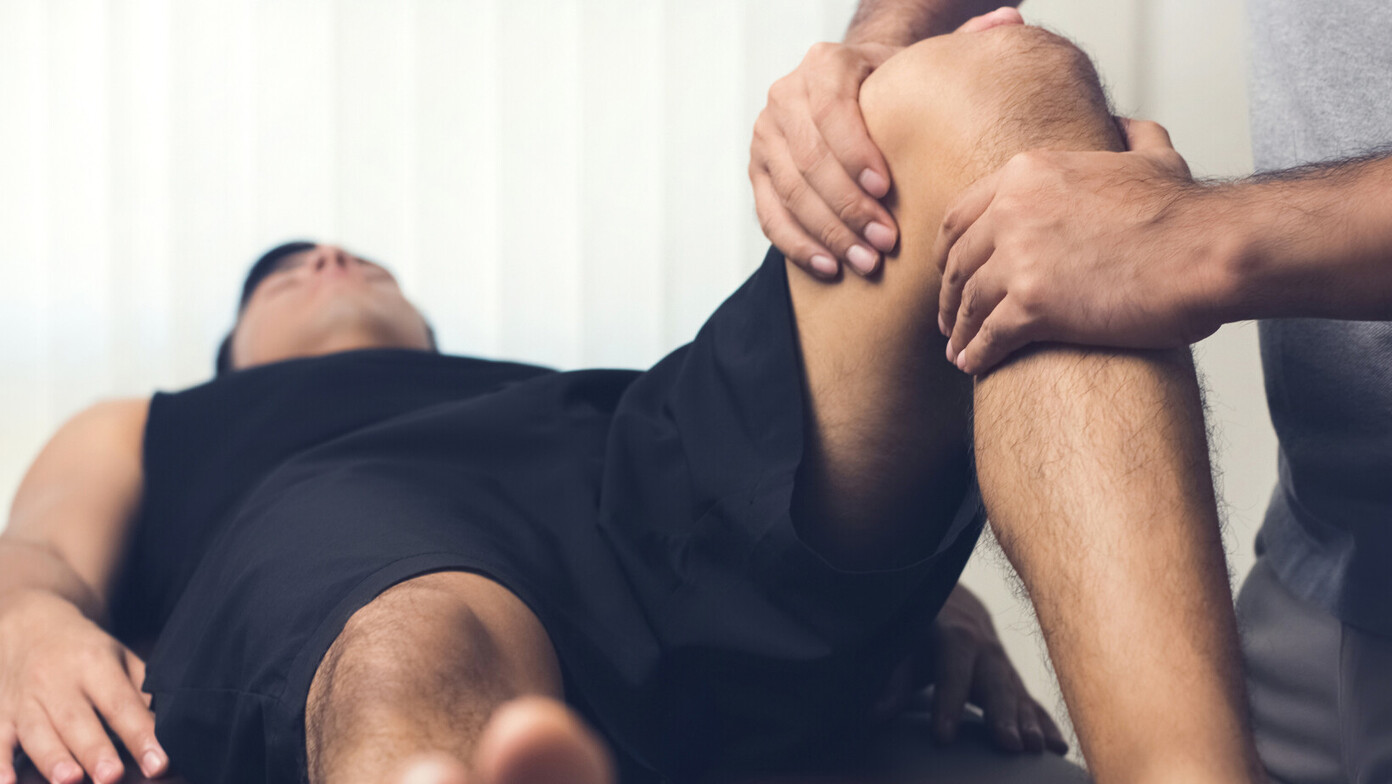
Knee osteoarthritis can make exercise feel difficult, but avoiding activity altogether usually leads to greater weakness, stiffness, and loss of confidence.
A recent study compared two 12-week resistance-training programs for older adults with knee osteoarthritis. One group exercised on stable surfaces, while the other incorporated unstable surfaces such as balance pads.
Both groups experienced improvements in knee pain. However, participants who trained on unstable surfaces showed greater improvements in balance and certain measures of muscle coordination.
Dr. Carter’s Takeaway
Strength training can benefit people with knee arthritis whether it is performed on a stable or appropriately unstable surface.
When balance and coordination are also concerns, gradually adding a controlled balance challenge may provide additional benefits. That does not mean every exercise should be performed on a wobble board or BOSU ball. The exercise still needs to match the person’s strength, balance, pain level, and fall risk.
What Can You Do?
-
Begin with stable exercises you can perform safely and comfortably.
-
Build basic leg strength before introducing unnecessary instability.
-
Add balance pads or other unstable surfaces gradually.
-
Use a wall, railing, countertop, or trained professional for support.
-
Stop and seek guidance if an exercise causes sharp pain, knee buckling, increased swelling, or a significant loss of balance.
The participants in this study completed supervised exercise sessions three times per week for 12 weeks. Unstable-surface training should therefore be viewed as a controlled progression—not something every person with knee arthritis should attempt independently.
View or download the Knee Osteoarthritis Care infographic
Research Source
Liu P, Hamid MS, Shi Y, Fan X, Deng H, Hafiz E, Zhang X, Hao Y. Comparative Effects of 12-Week Resistance Training on Unstable and Stable Surfaces on Muscle Stiffness, Muscle Co-activation, and Balance in Older Patients with Knee Osteoarthritis. Gait & Posture. 2026;130:110287.
This information is educational and is not a substitute for an individual evaluation or medical advice.